
1. McCulloch v Maryland - (1819) state challenged US authority
⭐ Does Maryland have the right to tax a federal institution?
- Creation of federal banks weren't written in the Constitution; created anyways because of the elastic clause.
- doctrine of implied powers - necessary and proper clause; Congress has a vast source of unlisted powers needed to achieve its Constitutional responsibilities
- The US set up a federal bank since it could regulate and coin money
Ruling - Maryland could not tax a federal institution because the laws protecting the creation of this bank are supreme to state laws.

2. Marbury v Madison - (1819) Jefferson (winner) vs Adams presidency
- Adams signed Judiciary Act of 1801 right before leaving office; this led judges and courts from his party into the government after left
- ⭐ Midnight appointments - 16 judges and 42 justices approved by the Senate
- since it was done so late into Adam's presidency, not everyone got their commission which without it, prevents them from serving in office
- Jefferson told the Secretary of State, Madison, to stop sending commissions (ended up being illegal).
- Marbury, one of the midnight judges, took Madison to Court
Ruling - Judiciary Act of 1789 was unconstitutional; Congress can't make changes to the Constitution through law making alone because of the Constitution is the Supreme Law; establishes the Judicial Review
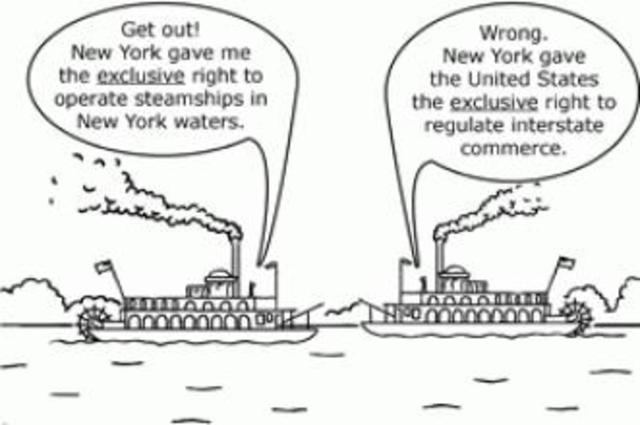
3. Gibbons v Ogden (1824) Interprets commerce clause (Act 1, Section 8)
- New York gives Ogden a route that goes through New York and New Jersey to use; he ends up monopolizing ferries under that route
- Ogden sues Gibbons who also had permission from the government to operate his own steamboats
Ruling - the term "interstate commerce" was broadly defined in the Constitution, which allowed Congress to regulate navigation between states

4. Dred Scott v Sanford (1857)
- Scott sued Missouri for his freedom because he had been living in free states (Illinois and Louisiana Territory) and was a free man for 10 years
Ruling - African Americans were not citizens but property, and this status would also pass along to descendants; Court also declared the Missouri Compromise unconstitutional and Congress can't free slaves
Comments
Post a Comment